Research Areas
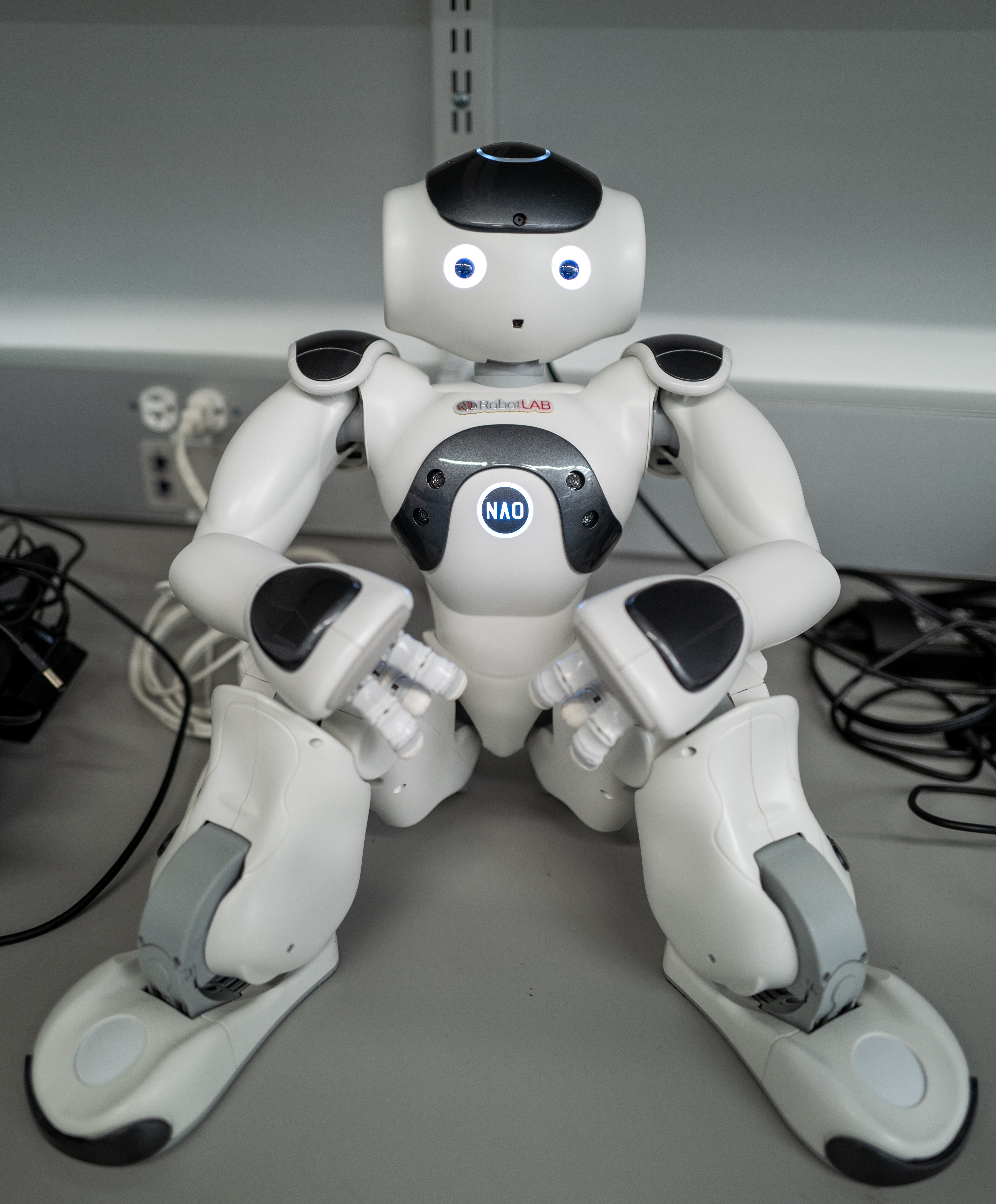
Building Positive Human-Robot Relationships
As robots engage with people over longer periods of time, it becomes increasingly important to understand how to build and maintain positive relationships between humans and robots.
We study robot behaviors that can build rapport and connections with people to improve interaction outcomes including robot personality, responsiveness, physical touch, and requests for help.
Selected Publications
- Flanagan, T., et al. (2026). Can You Help Me? The Influence of Robot Requests for Help on Child-Robot Connection. HRI 2026.
- Zhang, A. W., et al. (2025). Exploring Robot Personality Traits and Their Influence on User Affect and Experience. HRI 2025.
- Lin, T.H., et al. (2025). Connection-Coordination Rapport (CCR) Scale: A Dual-Factor Scale to Measure Human-Robot Rapport. HRI 2025.
Robots for Education
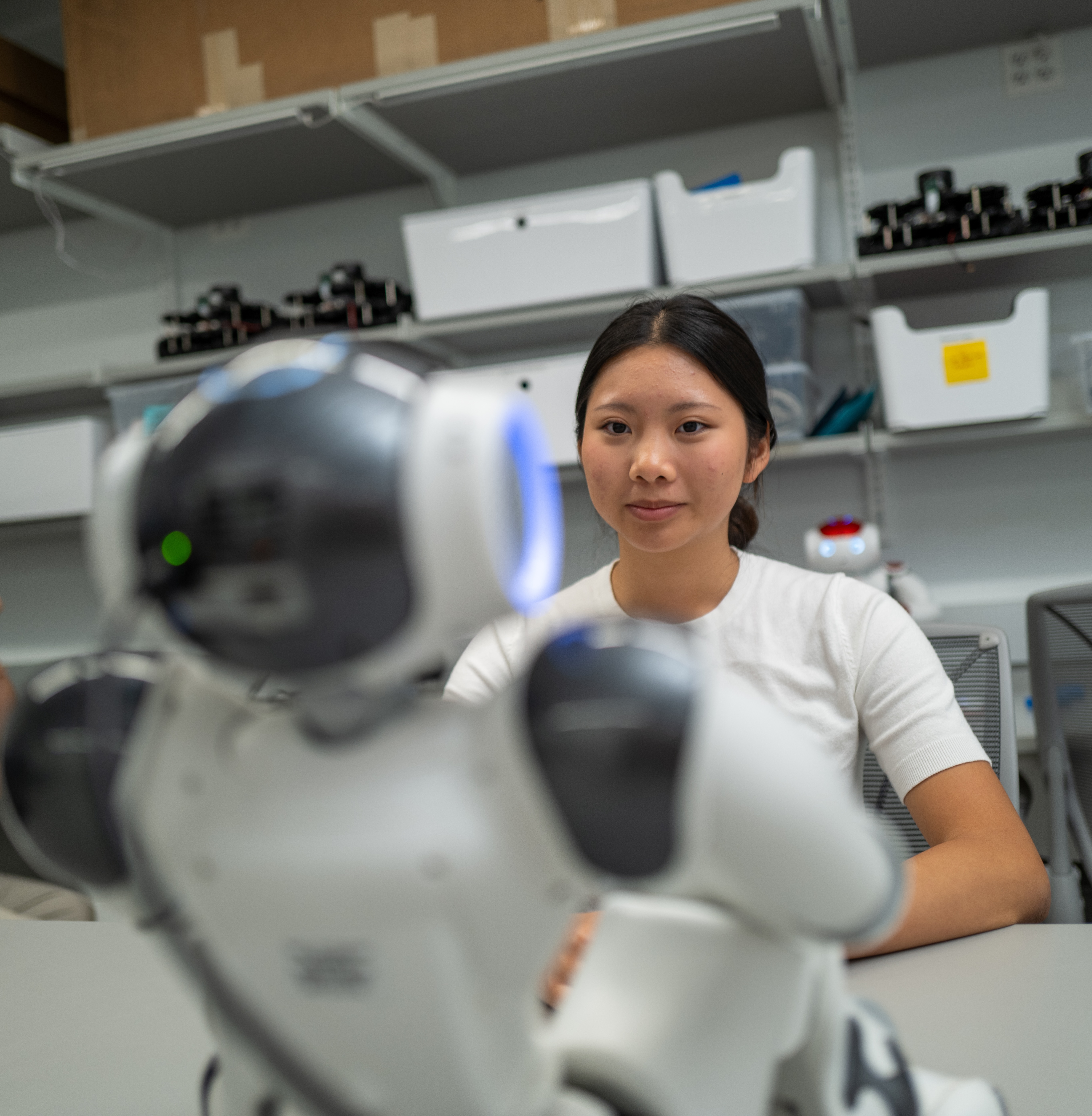
Each student learns differently and requires individualized support to achieve academic success. Robot tutors have emerged as a promising technology that can provide individualized feedback, a "safe space" for learning, and a sense of social presence during learning.
Our work has explored how robots can leverage social behavior responsibly to support student learning and how robots can create safe, judgment-free spaces for students to practice skills such as reading aloud.
Selected Publications
- Wright, L. L., et al. (2026). Fictional vs. Factual Robot Tutor Dialogue Can Shape Child Social-Emotional Learning. HRI 2026.
- Flanagan, T., et al. (2026). Can You Help Me? The Influence of Robot Requests for Help on Child-Robot Connection. HRI 2026.
- Wright, L. L., et al. (2025). Robotic Reading Companions Can Mitigate Oral Reading Anxiety in Children. Science Robotics.
Exploring How Robots can Influence Human-Human Interactions
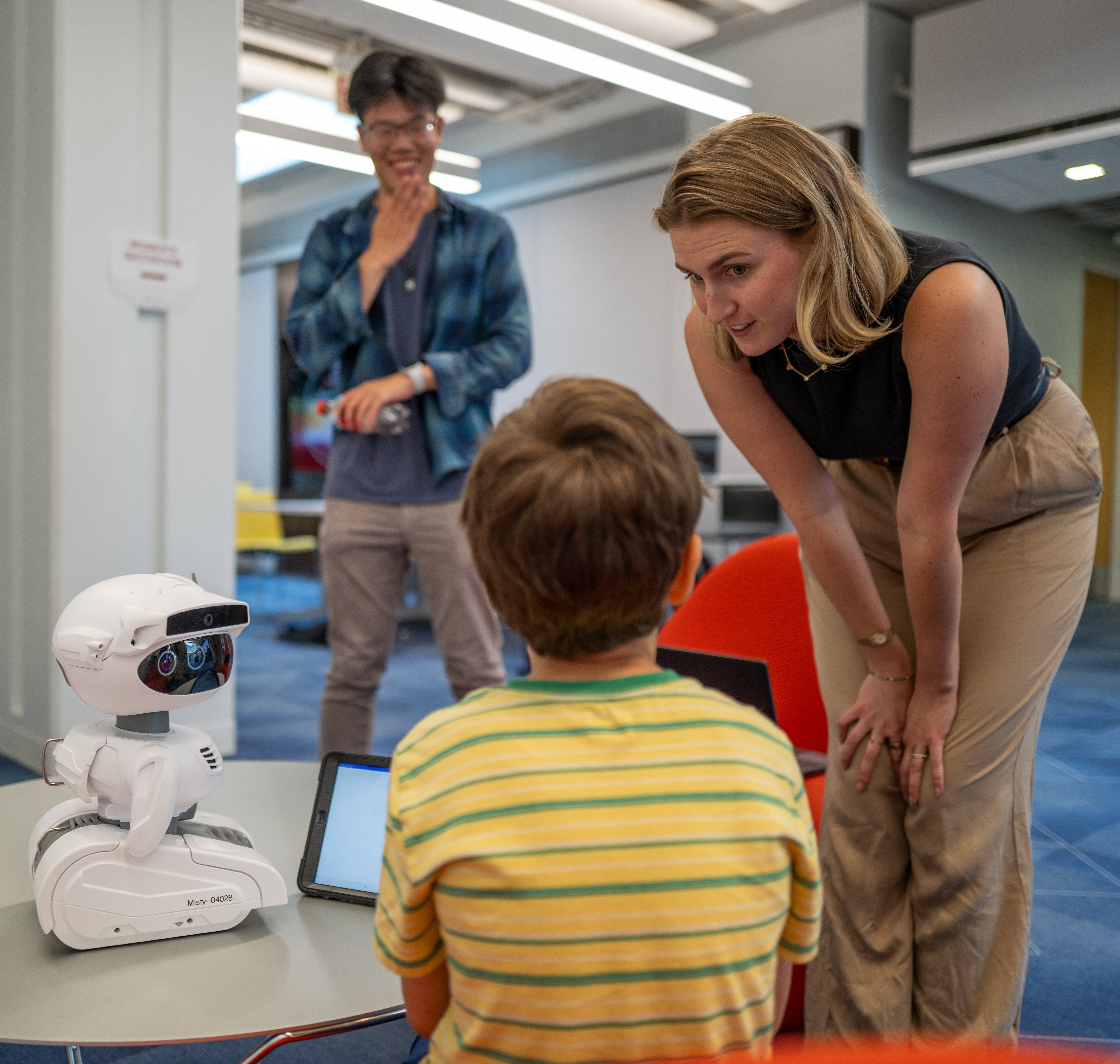
Given the importance of human-human social connections for our well-being and the potential for robots to replace humans or damage human-human social connections, we are motivated to explore the potential effects of robot behavior on human-human relationships.
Our work has shown that robots can shape human-human social dynamics in collaborative human-robot groups, demonstrating the potential for robots to both positively and negatively influence human-human relationships.
Selected Publications
- Gillet., S, et al. (2024). Interaction-Shaping Robotics: Robots that Influence Interactions between Other Agents. ACM Transactions on Human-Robot Interaction (THRI).
- Zhang, A. W., et al. (2023). Ice-breaking technology: Robots and computers can foster meaningful connections between strangers through in-person conversations. CHI 2023.
- Sebo, S., et al. (2020). Robots in Groups and Teams: a Literature Review. CSCW 2020.
- Sebo, S., et al. (2018). The Ripple Effects of Vulnerability: The Effects of a Robot's Vulnerable Behavior on Trust in Human-Robot Teams. HRI 2018.
Unique Attributes of Human-Robot Interactions
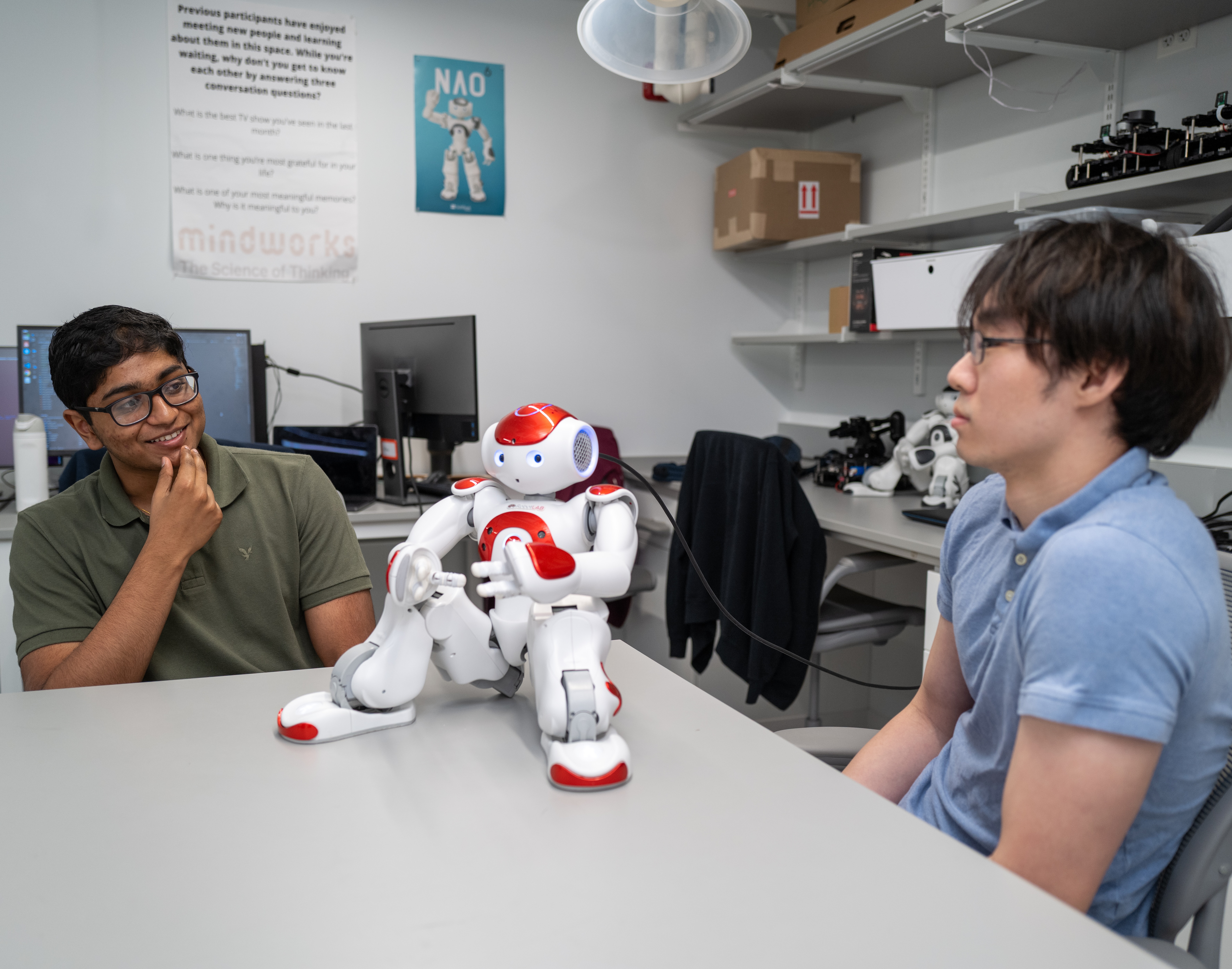
Motivated by the desire to discover and leverage the unique strengths of humans and robots as opposed to designing robots to simply "copy" human behavior, we explore unique aspects of human-robot relationships that set our relationships with robots apart from those with people and other forms of technology.
We have discovered that people feel less anxious and less judged when interacting with robots compared to people and that people are more compliant to a robot's suggestions than other forms of technology.
Selected Publications
- Wright, L. L., et al. (2025). Robotic Reading Companions Can Mitigate Oral Reading Anxiety in Children. Science Robotics.
- Lin, T.-H., et al. (2024). Benefits of an interactive robot character in immersive puzzle games. RO-MAN 2024.
- Zhang, A. W., et al. (2023). Ice-breaking technology: Robots and computers can foster meaningful connections between strangers through in-person conversations. CHI 2023.
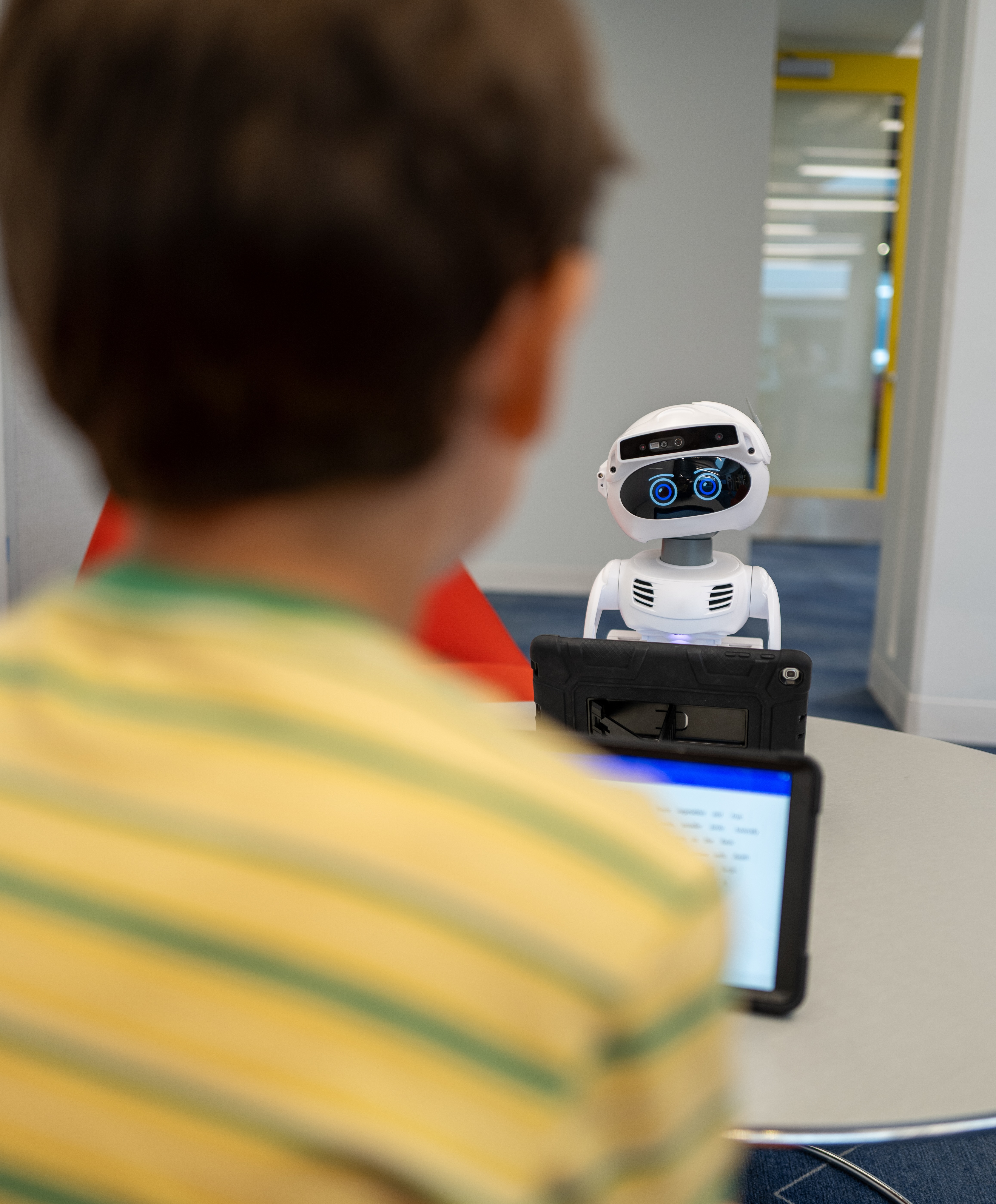
Robot Autonomy and Social Agency
We consider devices such as calculators and microwaves to be "machines", however, we consider social robots that engage with people in human-like ways to be social agents, with intentions, feelings, and desires.
Our work investigates what factors influence whether people perceive a robot as a social agent versus a machine (e.g., the degree of user control), and how these perceptions impact interaction outcomes.
Selected Publications
- Zhang, A. W., et al. (2026). Customizing Robot Personality: How Personality Control and Form Factor Shape Perceptions of a Robot as a Social Agent. HRI 2026.
- Zhang, A. W., et al. (2025). Balancing User Control and Perceived Robot Social Agency through the Design of End-User Robot Programming Interfaces. HRI 2025.
- Kim, S., et al. (2024). A Taxonomy of Robot Autonomy for Human-Robot Interaction. HRI 2024.